

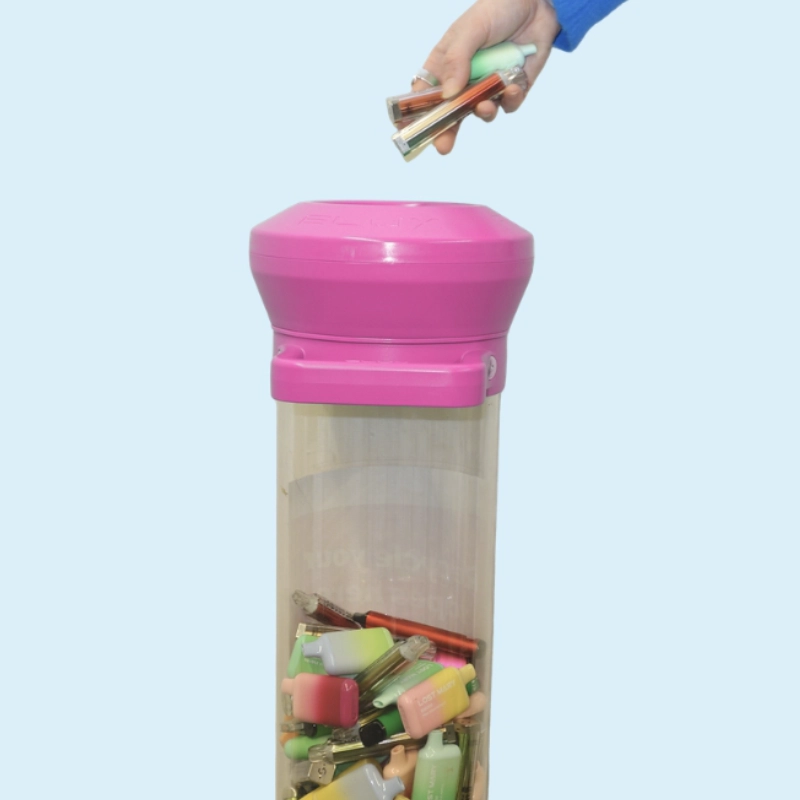
Vape recycling retailer lottery – retailers are failing to provide recycling points leaving millions of vapes thrown away and fuelling fires
One year on from the 1st June 2025 ban on the sale of disposable vapes, Material Focus warns that a ”retailer recycling lottery” is undermining the environmental intentions behind the ban as recycling a vape is still not as easy as it is to buy one. New research reveals that while the ban is beginning to reduce the number of vapes thrown away, gaps in information and access to recycling points are still contributing to 6.3 million vapes and pods being discarded each week. Material Focus is calling on all retailers who sell and profit from vapes to step up and comply with their legal environmental obligations. This must be matched by producers ditching the use of ‘disposable’ to describe vapes and instead provide clear recycling information.
Despite the 2025 ban, the vapocalypse continues. The lithium-lion batteries used inside vapes are fuelling a rise in fires in bin lorries and at waste and recycling centres. Material Focus has found that the lithium being discarded in vapes annually is enough to power 5,000 electric vehicle batteries, and yet 47% of vapers are still unaware the devices can even be recycled.
Since Material Focus first started monitoring the purchase and disposal methods of vapes, 1.18 billion vapes have been thrown away over the past 4 years. Legislation requires retailers to provide recycling points, but the reality on the ground is a retailer recycling lottery with many retailers either not providing or not publicising this service. Research commissioned by Material Focus found that only 43% of those who tried to recycle their vape at a supermarket were unable to find a recycling point, rising to just 63% at local convenience stores, and dropping to 33% at specialist vape retailers. And 57% of consumers say they are more likely to buy a vape from a store that offers recycling.
The information gap is also fuelling consumer confusion. Material Focus research found that 47% of people were unaware that they could recycle vapes and 67% of all vapers said they would be more likely to recycle if products were marketed as recyclable.
Vapes are powered by lithium-ion batteries, which if binned can get crushed or damaged and spark dangerous fires in bin lorries and waste and recycling centres. Material Focus received information from two of the largest waste and recycling companies in the UK who have reported that they are still experiencing significant challenges due to ongoing high numbers of vape waste in the system. Veolia is continuing to experience a fire a day in their vehicles and at their waste and recycling centres, a trend which has endured for around four years, which they think are likely caused by lithium batteries found inside vapes and other electricals. Biffa is now receiving over 217,000 incorrectly discarded vapes a month, with volumes rising again after an autumn dip and remaining close to the peak levels seen last summer.
“Vapes are one of the most environmentally wasteful, damaging and dangerous consumer products ever sold. The ban on disposables was a major move, but a ban on one particular type of vape is not a behaviour change strategy,” said Scott Butler, Executive Director of Material Focus. “Way too many of them are binned and littered. We have vapers that want to recycle and 67% say they’d be more likely to do so if products were marketed as recyclable. But they are being met with a ‘recycling lottery’. Retailers and producers of vapes have a legal duty to ensure that every vape sold has a clear and visible path to being recycled.”
Making vape recycling visible and convenient is critical for not only reducing waste but for helping to prevent dangerous battery fires caused by vapes being thrown out in household waste. Joanne Henderson, National Fire Chiefs Council’s Smoking and Vape Lead said: “Every vape that is thrown into a bin, where the lithium –ion batteries can become crushed or damaged, instead of being recycled correctly has the potential to cause a serious fire. These fires can start in household bins, or later in bin lorries and waste sites putting residents, workers and firefighters at risk.
“People want to do the right thing and dispose of these products safely as fire services advise them, but they need clear information and easy to access recycling points to do so. If recycling points and disposal advice were as prominent as vapes sales displays fewer devices would end up in the waste system and the number of these waste fires would be reduced.”
Material Focus is today issuing a call to action:
To make it easier for members of the public to recycle and for retailers and producers to comply with their environmental obligations Material Focus is providing the following :
ENDS
For media enquiries please contact media@materialfocus.org.uk
Research Methodology: Research was conducted online by Opinium Research between 29th December 2025 – 9th January 2026 to a sample of 1,000 people aged 16+ who have bought a vape since 1st June 2025, results have been weighted to be representative of the UK population. Of a representative UK sample of 2,00 adults 345 had bought a vape since 1st June – 345/2000 = 17% of UK adults this is 9,491,339. The number of those who buy / throw each type of vape were calculated by multiplying the % of the overall vapers sample they made up by the total numbers of vapers in the UK.
Material Focus is a not-for-profit organisation whose goal is to stop the nation throwing away or hoarding all their old small electricals. Material Focus is delivering the UK-wide Recycle Your Electricals campaign. The campaign is revealing the value hidden in electricals and is making it easier for us all to recycle and reuse the small electricals we no longer need by providing more recycling points as well as providing practical information on how households can recycle.
The campaign is funded by producers of electrical appliances. The UK government sets annual targets for the recycling of all waste electricals, including small electricals. If producers of electrical appliances don’t meet this target, then they contribute towards a fund (WEEE Fund) which pays for a range of activities, including communications, behaviour change activities, increased recycling projects and research. Ultimately the aim is to support actions that will help the UK increase the levels of reuse and recycling of waste electricals.
One of our friendly team will be happy to help.


